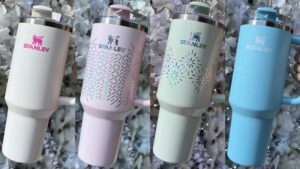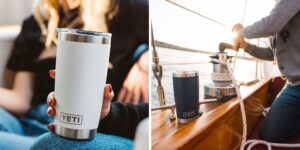
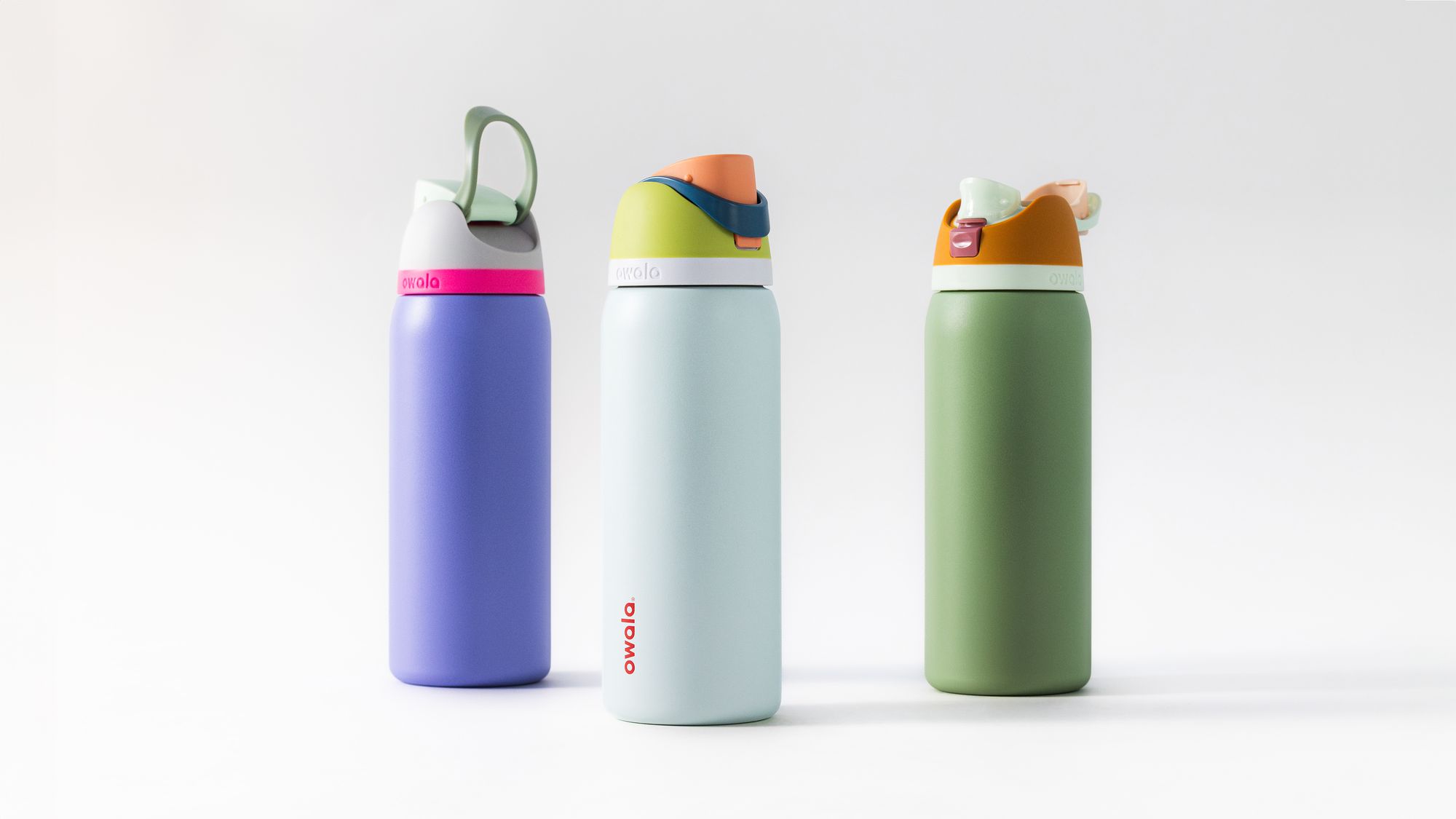
By introducing the innovative FreeSip® technology (a push-button flip cap with a dual-path drinking system), Owala successfully disrupted the market dominance of traditional giants like YETI, Stanley, and Hydro Flask. Recognized as one of TIME’s Best Inventions of 2023, Owala has become one of the fastest-rising hydration brands in North America, gaining massive visibility across Amazon, Target, and diverse consumer communities.
For B2B buyers evaluating Owala private mold customization, understanding how this brand balances complex fluid dynamics, mechanical reliability, and mass production is essential. Because for this category of hydration gear, the manufacturing barrier is no longer the stainless steel bottle—the lid is the product.
I. Brand Identity & The “Repeat-Purchase” Engine
Owala’s success is not just about capturing Gen Z; it stems from fundamentally reshaping the user experience of high-frequency daily hydration.
- School & Family Market Expansion:Owala’s growth extends far beyond outdoor enthusiasts. It heavily dominates the student, campus, and family markets. The 100% leak-proof design is perfect for backpacks, the push-button mechanism is highly kid-friendly, and the bottles are lighter than a Stanley and more playful than a Hydro Flask. It targets a much higher-frequency hydration scenario: school + commute + gym + lifestyle.
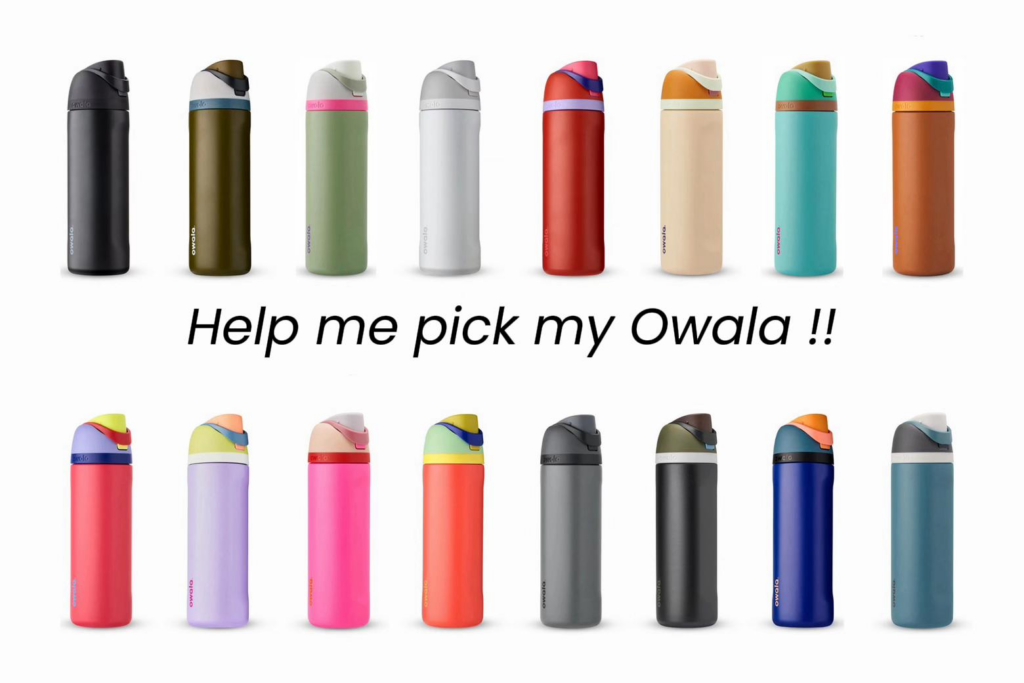
- Color-Blocking as a Repeat-Purchase System:Owala’s signature “Dopamine color-blocking” is not merely an aesthetic choice; it is a highly calculated SKU repeat-purchase system. Through multi-component color separation, seasonal drops, and retailer-exclusive colorways, Owala transformed the water bottle from a “functional durable good” into a “collectible personal accessory.” If Stanley grew through large-capacity lifestyle branding, Owala scales through structural functionality paired with color personalization.
II. Technical Deep Dive: The “FreeSip” Engineering Barrier
The true supply chain barrier for Owala-style products lies in the exceptionally demanding multi-component injection molding and precision assembly.
1. User-Friendly Engineering: Complex Inside, Simple Outside
Owala’s greatest product logic isn’t just making a complex lid; it is hiding extreme structural complexity behind a near-zero learning curve.
The user performs only three simple actions: push the button to open, sip through the straw, or swig through the spout. However, behind these actions, the manufacturing side must perfectly execute:
- High-fatigue spring rebound systems and lock-limit structures.
- Dual-channel fluid routing and negative pressure control.
- Precise compression ratios for multi-zone silicone sealing.
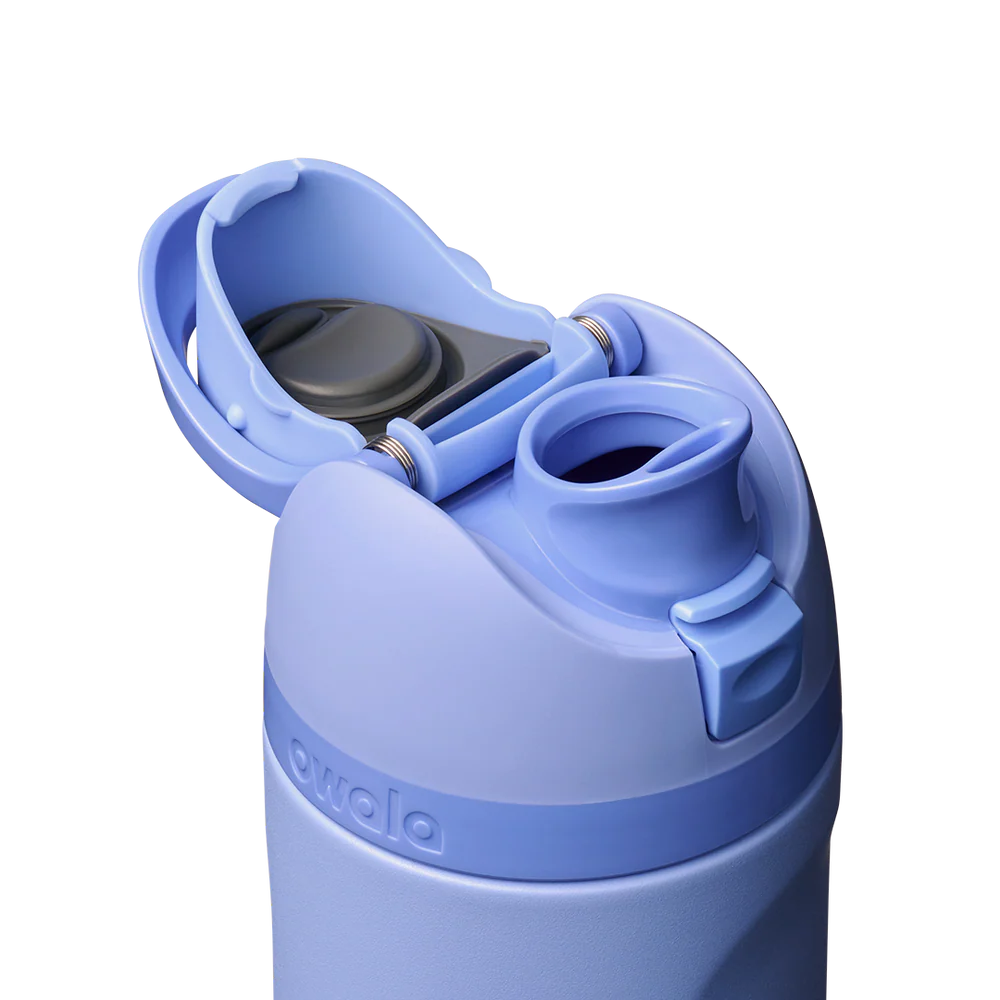
2. Dual-Path Fluid Dynamics
The core of FreeSip® is the seamless integration of two fluid paths. The straw channel requires precise negative pressure control to prevent “chugging” or intermittent water flow, while the wide-mouth spout demands a high-flow, splash-free channel.
This necessitates a high-precision single-directional silicone valve (utilizing liquid surface tension to block reverse flow when tilted). Even a microscopic deviation in mold tooling or injection parameters here will lead to a catastrophic downgrade in user experience.
3. Multi-Material & Thermal Expansion Management
An Owala-style lid consists of 5 to 7 independent components (PP body, Tritan flip cap, silicone seals, stainless steel springs, etc.). Because materials like Tritan and PP have entirely different coefficients of thermal expansion, the mold design must account for extremely precise tolerances (±0.05mm). This ensures the lid neither binds nor leaks after alternating between ice water and ambient room temperatures.
III. Functional Boundaries & Hidden Risks in Custom Development
In OEM/ODM development, highly complex designs carry hidden post-sales risks. A professional supply chain must anticipate these boundaries.
1. Functional Boundary: Optimized for Cold Hydration
Blindly marketing an Owala-style lid as “all-purpose hot and cold” is a risk. The FreeSip structure is optimized primarily for cold hydration. Because the lid contains pressure-sensitive sealing areas, straw channels, and a push-button mechanism, hot liquids or carbonated beverages can create internal pressure buildup, leading to splash risks or seal failure upon opening. B2B buyers must clearly define this usage boundary.
2. Cleaning Access & Hygiene Risk Control
The biggest post-sales complaint for complex lids is rarely leakage—it’s that users feel they “can’t clean it properly.” The straw interface, internal silicone valves, hinge crevices, and button cavities can easily become hygiene blind spots.
Top-tier private mold development solves this by incorporating:
- Easily removable wide-diameter straw designs.
- Rounded internal corners (large radii) to eliminate dead-angle gaps.
- Low-odor-absorption food-grade/medical-grade silicone.
- Dishwasher-safe material selection across all lid components.
3. Lead-Free Construction as a Trust Signal
At a time when consumers are highly sensitive to hidden material risks in insulated bottles, Owala utilized lead-free solder construction from the very beginning. Turning this safety standard into a powerful trust signal is now a baseline requirement for premium drinkware brands entering global markets.
IV. Manufacturer’s Perspective: ELENGIC’s Precision Solutions
As a veteran manufacturer in the Wuyi-Yongkang industrial cluster, ELENGIC recognizes that “the lid is the core product.” For B2B clients seeking Owala-level structural complexity, we offer the following exclusive private mold optimizations:
| Technical Dimension | Common Market Flaws | ELENGIC Exclusive Optimization |
| Spring Mechanism | Plated steel springs rust or lose tension after 500 cycles. | 316 SS High-Tension Springs: Rated for 10,000+ open/close cycles; zero oxidation. |
| Fluid Valves | Minor backflow when tilted causes leaks at the straw interface. | Precision LSR Flapper Valve: Liquid Silicone Rubber with surface-tension sealing; zero reverse flow. |
| Button Tactility | Buttons feel mushy or stick due to mold parting line flash. | High-Precision CNC Mold Finishing: Eliminates burrs for a crisp, mechanical “click” every time. |
| Locking Mechanism | Plastic catches wear down rapidly from high-frequency friction. | Stainless-Steel Reinforced Lock Node: Metal-on-metal engagement ensures long-term locking reliability. |
| Color Management | Visible color variance between matte PP and translucent Tritan batches. | Unified Digital Color Management (UCM): Spectrophotometer-verified matching for flawless Dopamine color-blocking. |
🔬 The Ultimate Validation Test Matrix
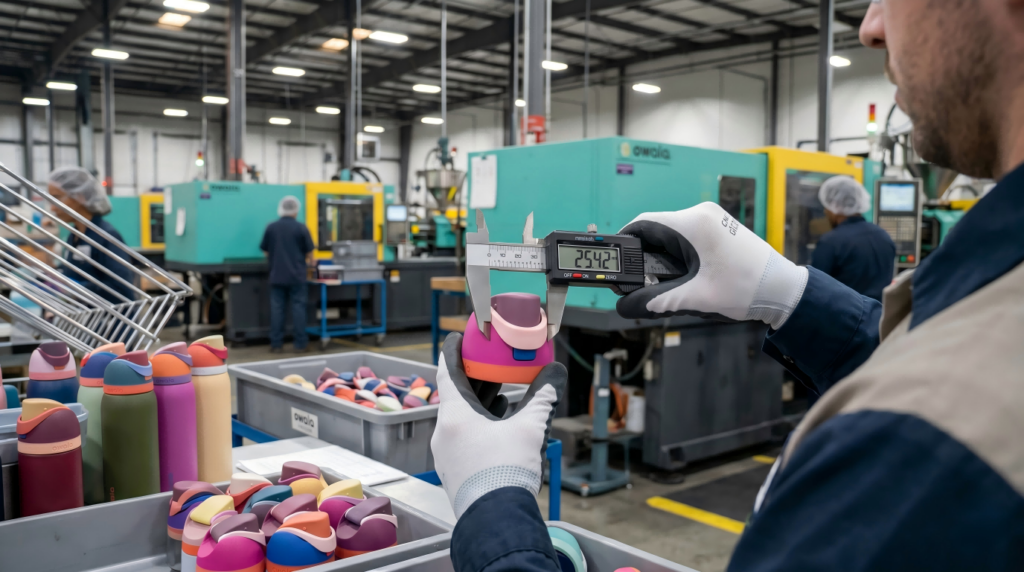
Any high-quality complex flip-lid must pass ELENGIC’s rigorous testing protocols before mass production. For your private mold, we execute:
-
10,000+ open-close cycle test
-
Button rebound fatigue test
-
Lock engagement force test
-
Inverted and side-drop leakage test
-
Thermal cycling test (-10°C to 70°C)
-
Dishwasher cycle test
-
Silicone odor migration test
🏭 Industrial Insight: Your Precision Engineering Partner
The Wuyi-Yongkang industrial cluster powers the global premium drinkware supply chain. Within this ecosystem, ELENGIC specializes in overcoming the most demanding technical barriers: high-precision multi-component injection molding and leak-proof fluid dynamics.
We don’t just replicate complexity; we engineer it for reliability. From 3D conceptual modeling and mold incubation to 10,000-cycle validation, we provide global brands and Amazon top sellers with end-to-end private mold customization. Let’s build the next generation of functional hydration gear. Reach out today to start your project.